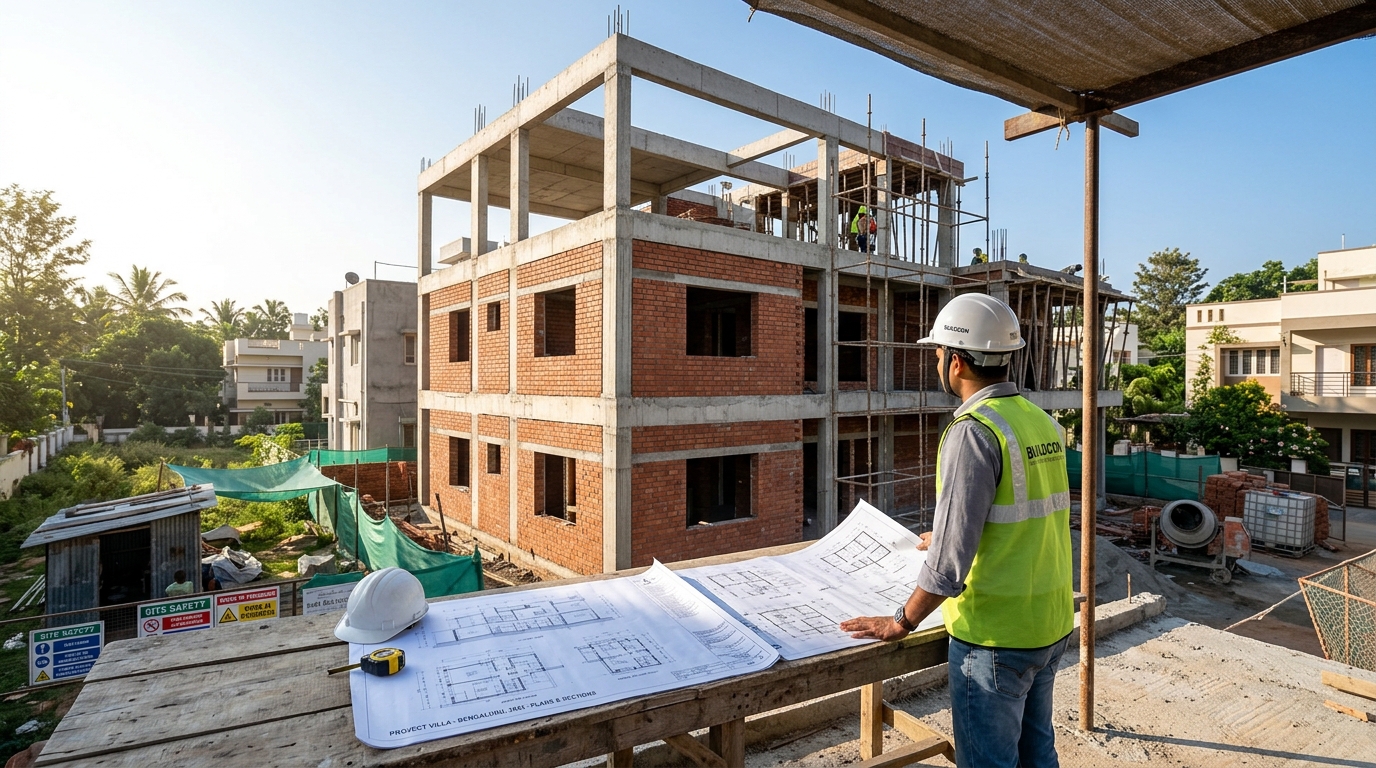
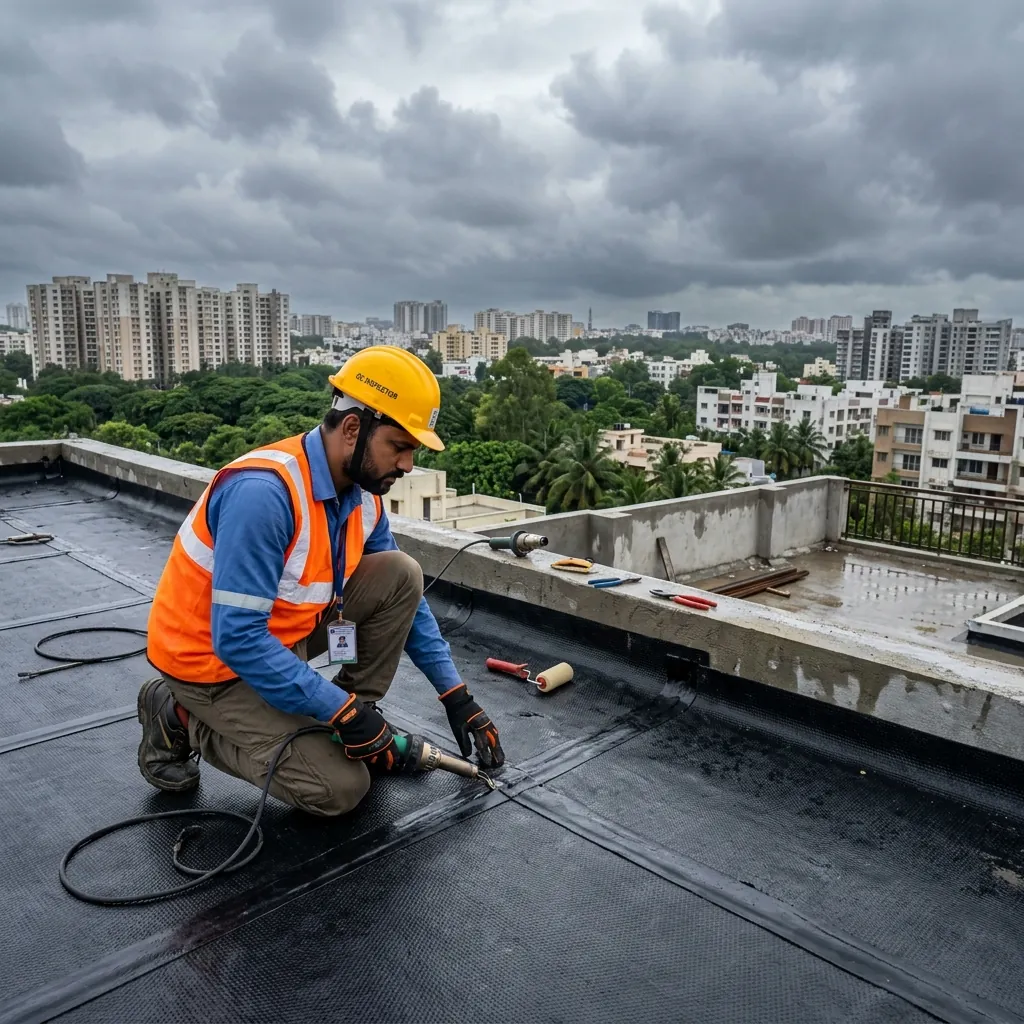
When visitors walk into a newly completed luxury home, they admire the Italian marble flooring, the fluted wall paneling, and the brass lighting fixtures. But the true longevity, thermal comfort, and safety of your residence depend on what is hidden beneath the plaster: the steel rebar, the cement hydration curve, the aggregate grading, and the moisture barriers.
Cosmetic interiors can be refurbished in ten years. The structural skeleton cannot be replaced.
As Design Director at Construction Buddy, I have inspected hundreds of construction sites across Bengaluru. Here is the definitive, engineer-backed guide to selecting materials that guarantee your home stands unblemished for generations.
1. Structural Steel: The Backbone of Your Home
Structural steel provides tensile strength to reinforced concrete. In concrete beams and slabs, concrete handles the compression while steel absorbs the tension.
Primary Steel vs Secondary Re-rolled Steel
Always insist on Primary TMT Rebar manufactured through the virgin iron ore route (Blast Furnace):
- Approved Primary Brands: Tata Tiscon, JSW Neosteel, SAIL, Jindal Panther.
- Why Avoid Secondary / Re-rolled Steel: Secondary rebar is melted from scrap metals. It contains unpredictable impurities (excess phosphorus and sulfur), causing the rebar to become brittle. Under seismic stress or heavy thermal expansion, re-rolled steel can snap without warning.
What Does Fe550D Mean?
- Fe: Chemical symbol for Iron.
- 550: Yield strength of 550 N/mm² (can withstand 550 Newtons of tension per square millimeter before yielding).
- D (High Ductility): Crucial for seismic resistance. Fe550D steel elongates significantly before failure, giving occupants time to evacuate during an earthquake.
"On-Site Test: Bend a sample 16mm TMT rebar 180 degrees around a mandrel. High-quality Fe550D primary steel bends smoothly without forming surface micro-cracks on the outer curve." — Jawad Hafeez
2. Cement Selection: OPC 53 vs PPC 43 Grade
A common mistake homeowners make is using the same bag of cement for everything. Different structural applications require different chemical hydration properties.
| Cement Type | Optimal Applications | Key Advantage | Recommended Brands |
|---|---|---|---|
| OPC 53 (Ordinary Portland Cement) | RCC Footings, Columns, Beams, Suspended Slabs | High early strength gain (attains 70% strength in 7 days); quick shuttering removal | UltraTech, ACC Concrete+, Birla Super |
| PPC (Portland Pozzolana Cement) | Brick / Block Masonry, Internal & External Plastering | Contains fly-ash; low heat of hydration; highly resistant to sulphate attack and shrinkage cracks | UltraTech Super, Ambuja, Dalmia |
Rule of Thumb: Use OPC 53 for the load-bearing RCC framework where rapid structural strength is vital. Use PPC for wall masonry, plastering, and underground water sumps because it produces fewer thermal shrinkage micro-cracks and creates a denser, more waterproof matrix over 90 days.
3. Wall Infill: Red Clay Bricks vs Solid Concrete Blocks vs AAC Blocks
Choosing your walling material impacts structural dead weight, room thermal comfort, and construction speed:
| Specification | Traditional Red Clay Bricks | Solid Concrete Blocks | AAC Blocks (Autoclaved Aerated Concrete) |
|---|---|---|---|
| Compressive Strength | 3.5 to 5.0 N/mm² | 4.0 to 5.5 N/mm² | 3.0 to 4.0 N/mm² |
| Dry Density (Dead Weight) | 1800 - 2000 kg/m³ | 1900 - 2100 kg/m³ | 550 - 650 kg/m³ (65% Lighter!) |
| Thermal Insulation (K-value) | 0.81 W/m-K | 0.95 W/m-K | 0.16 W/m-K (Superior Coolness) |
| Water Absorption | 15% - 20% | 8% - 10% | 10% - 12% |
| Dimensional Accuracy | Low (requires thick plaster) | Medium | Extremely High (thin-bed adhesive) |
Our Recommendation for Bengaluru
- AAC Blocks: Ideal for multi-storey villas and upper floors. Their featherlight weight reduces structural load on columns and footings, while their micro-cellular air pockets keep your home up to 4°C cooler in Bengaluru summers.
- Wire-Cut Red Bricks: Unbeatable if you desire timeless exposed-brick facades or rustic interior feature walls.
- Solid Concrete Blocks: Best for basement retaining walls and ground-floor compound structures requiring high point-load impact resistance.
4. Sand & Aggregates: The Reality of Manufactured Sand (M-Sand)
River sand extraction is environmentally destructive and largely prohibited in Karnataka. Today, Manufactured Sand (M-Sand) is the engineering standard—provided it is tested for silt content.
- Concrete M-Sand (Zone II): Cubical-shaped crushed granite particles with zero organic debris. Ensures dense concrete compaction with minimal voids.
- Plastering Sand (P-Sand): Specially sieved fine grit (< 0.15mm) washed to eliminate quarry dust. Prevents unsightly hair-line cracks on painted interior walls.
- Coarse Aggregates: Use clean, machine-crushed 20mm down aggregates for slab casting, and a 60:40 blend of 20mm and 12mm aggregates for heavily reinforced slender columns to avoid honeycombing.
5. Fenestration: UPVC vs Thermally Broken Aluminium
Your windows represent your barrier against Bengaluru's dust, monsoon downpours, and city traffic:
- Lead-Free Multi-Chamber UPVC (Kommerling, Fenesta): Excellent acoustic dampening, zero thermal bridging, impervious to humidity, and maintenance-free.
- Slim-Profile Thermally Broken Aluminium (Schüco, Reynaers): The architect's choice for floor-to-ceiling sliding glass doors and minimalist luxury aesthetics. Ensure the frames feature a polyamide thermal break to prevent heat conductivity.
- Glazing: Always specify Double Glazed Units (5mm Toughened + 12mm Argon Air Gap + 5mm Toughened) for bedrooms facing roads to shut out traffic noise.
6. Concealed Plumbing & Electrical Infrastructure
Never cut corners on materials buried inside walls or under floor tiles:
- Water Supply Pipes: Use CPVC SDR 11 pipes (Astral, Ashirvad) rated for 93°C operating temperatures for both hot and cold lines. Avoid cheap PVC pipes that soften and rupture under solar water heater pressure.
- Drainage & Waste: Use foam-core triple-layer PVC pipes with push-fit rubber ring joints for noiseless, expansion-friendly vertical drainage.
- Electrical Wiring: Specify FRLS (Flame Retardant Low Smoke) pure copper wires (Finolex, Polycab, Havells) sized correctly (4 sq.mm for ACs and geysers, 2.5 sq.mm for power sockets, 1.5 sq.mm for lighting circuits).
Summary: The Material Integrity Checklist
When reviewing contractor estimates, do not look only at the bottom-line price. Verify that every material is specified by Brand, Grade, and Thickness. When quality materials are paired with certified engineering oversight, your home will remain sturdy, watertight, and majestic for the next hundred years.